
Manistee County Deed Types
The Manistee County Register of Deeds records every instrument that conveys or encumbers real estate. It also keeps those records permanently. A deed names the parties, states the transfer, and describes the land involved. Mortgages, releases, liens, plats, and recorded court orders sit beside deeds in the same land-record system. Not all of them transfer title. The instrument type matters when you read a result.
| Deed Type | What It Does | Common Use |
|---|---|---|
| Warranty deed | Conveys the stated interest with title promises | Ordinary sale or conveyance |
| Quitclaim deed | Conveys whatever interest the signer holds | Family, estate, or title cleanup |
| Fiduciary deed | Transfers through an authorized estate or trust actor | Probate or trust administration |
| Tax deed | Documents a transfer tied to tax foreclosure | Delinquent-tax process |
| Master deed | Creates and describes a condominium project | Condominium land records |
A mortgage or lien is an encumbrance, a recorded claim sitting on the land. Search it alongside the deeds. A transfer of ownership says nothing, by itself, about whether every claim was released. Match the latest deed to the same legal description. Use parcel clues rather than a familiar owner name.
Deed type never settles title quality on its own. A quitclaim can be fully valid for whatever interest the signer actually held. A warranty deed, by contrast, makes broader promises about that interest. Estate, trust, condominium, and tax instruments may pull in related records. These explain who signed and with what authority. Read the full recorded document and its exhibits. The short index label is only a starting point.
Two Manistee County Index Eras
Manistee County links two online paths for deed research. Cott RECORDhub carries a historical Manistee County index covering 1856 through 1991. Fidlar Tapestry is the county's current land-record host. A county notice states that pay-for-view land records run from 1978 forward. The overlap helps. A historical index reference can lead to the book, page, or instrument. That reference serves a vault search or copy request.
A January 2026 county board agenda included renewal of the Cott hosted index-books contract. That item signals the older index remains part of the county's working records route. It does not mean every historical image is online. The practical task is always the same: pin down the reference, then verify the underlying instrument.
The 1978-forward statement describes pay-for-view land records, not the start of county recording. The Cott range reaches much farther back. When a modern deed cites an old liber and page, carry that reference into the historical index or the public vault. Never stop just because the newer interface hits its date limit.
Source view: Cott hosts the historical Manistee County deed index route.

The hosted gateway marks where the older system begins. Later deeds turn to the county's Fidlar link instead.
Search Manistee Deed Records
The county does not publish every live Tapestry field label. Exact control names on the platform may shift. Start from the land-record concepts that never change. Begin with party names and a date range. Then narrow results with a known book and page. An instrument number, a parcel clue, or a legal description can also help. Confirm the current screen before trusting any exact control name.
| Search clue | Form | Use |
|---|---|---|
| County | Portal selection | Choose Manistee County |
| Grantor or party | Name text | Find a seller or conveying party |
| Grantee or party | Name text | Find a buyer or receiving party |
| Recording date | Date or range | Narrow common names |
| Document reference | Book/page or instrument | Open a known entry |
| Parcel or description | Supporting clue | Confirm the land when name search is broad |
Source view: Fidlar Tapestry is the current county-linked land-record host.
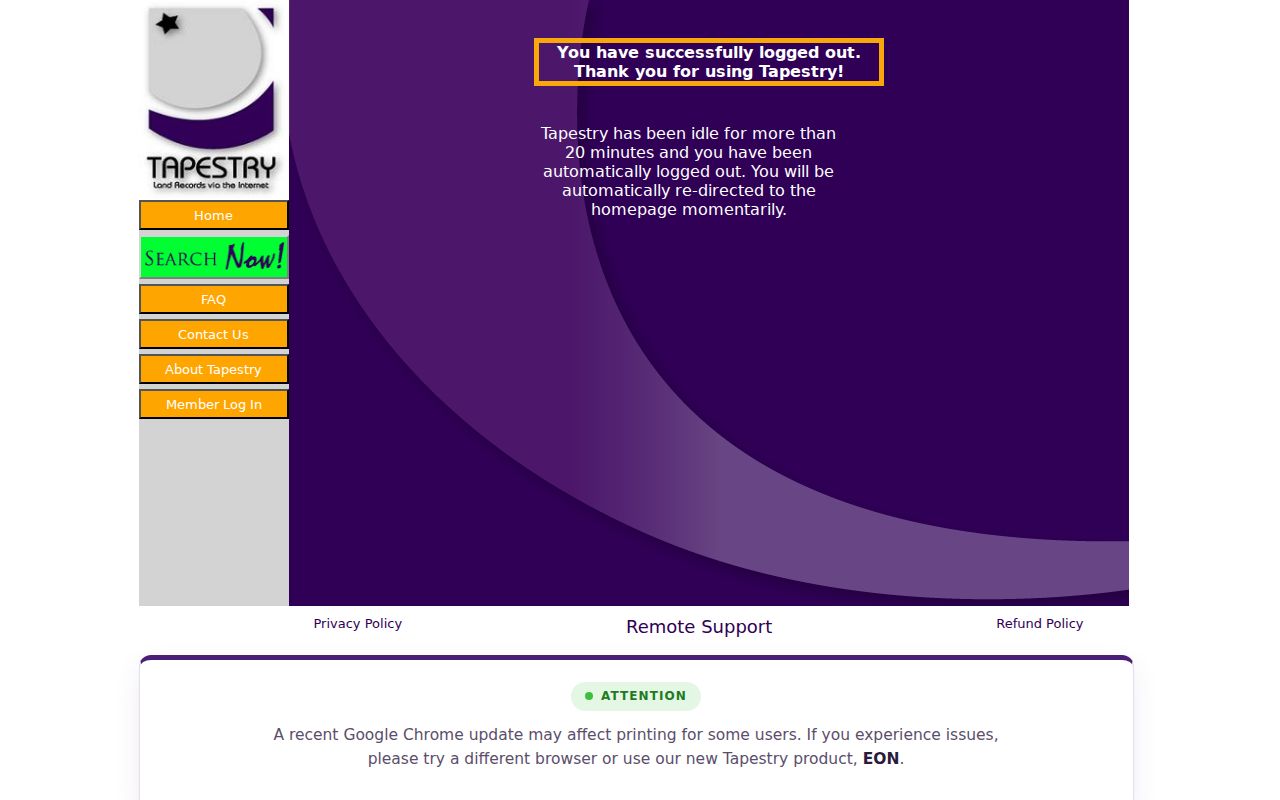
The official host's access surface is the place to confirm result columns in a live session. It is also where to check image charges. Expect any index entry to point toward party role, instrument type, and recording date. It should also show a document reference and a parcel or legal-description clue. The county publishes no live sample result. Sale price fields and exact image fees should therefore never be assumed. Verify the live labels before citing them in a transaction file.
Build a Manistee Deed Chain
A grantor-grantee index is built around the people or entities named in a recorded instrument. The grantor conveys an interest. The grantee receives it. To work backward, start with the current purchase deed, read who its grantor is, and then locate the deed through which that same grantor first acquired the land.
- Find the present owner's acquiring deed with that owner listed as grantee.
- Read the grantor and copy the land description and document reference.
- Search that grantor as an earlier grantee, then confirm the same tract.
- Repeat across each transfer and move to deed books or the vault when the online trail ends.
- Grantor
- The party that conveys the stated interest.
- Grantee
- The party that receives the stated interest.
- Chain of title
- The ordered sequence of instruments affecting ownership.
- Book and page
- A volume-and-page reference used to retrieve a recorded item.
Names alone will not carry a chain. Compare the legal description at every step. Manistee city deeds may cite named additions such as Filer, Tyson's, Green/Milmoe, Holden/Green, and Willard. A plat name can bridge an old lot-and-block deed to a modern parcel record.
Mortgages, releases, probate documents, and recorded court orders can break a simple seller-to-buyer sequence. Keep a worksheet noting recording date, grantor, grantee, deed type, and book/page for each transfer. A description can shift. Check for a split, a combination, a condominium master deed, or a plat before joining the chains.
Use the Manistee Deeds Vault
The Manistee County Register of Deeds operates as a public research facility under Michigan law. Anyone may walk in and inspect or copy the deed records. The office sits at 415 Third Street in Manistee. Public hours run Monday through Friday. Times are listed from 8:30 a.m. to noon and 1 p.m. to 4 p.m. The phone number is 231-723-2146. Come prepared before you visit. Bring the parcel number and every party name you know. Also bring a legal description and a realistic date span. Staff will run a simple search spanning up to 20 years. They stop short of a full title search. For deeper digging, you can research the deed records yourself in the vault. A title company or attorney can sort out the broader legal chain.
Source view: the county Register of Deeds page describes public and online access.
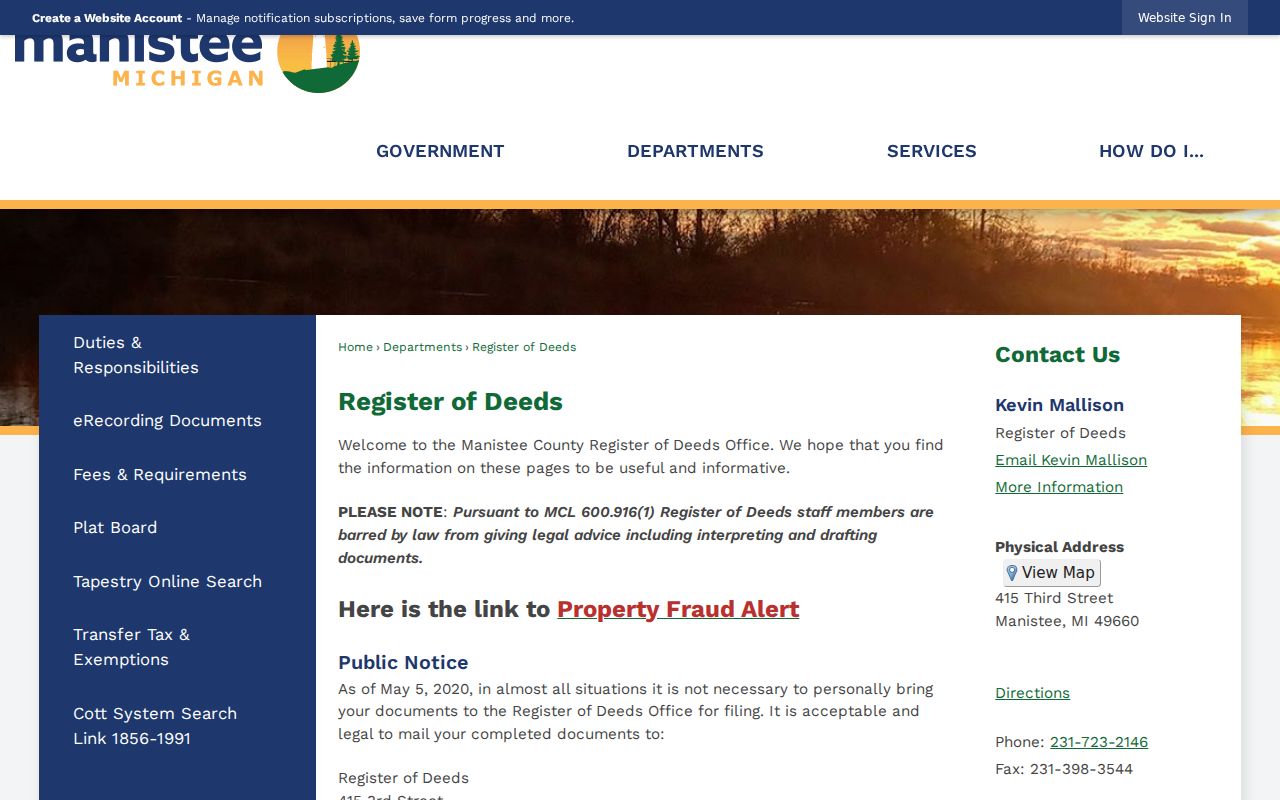
The county's own page links several deed resources together. It covers the physical vault, mail filing, and two online deed systems. In-person research often beats the computer. A common surname, hard-to-read handwriting, or an old index entry can stall an online property search. The vault solves all three problems. Call ahead to confirm current public hours. Ask which payment forms the office accepts for the copies you plan to order.
Manistee Deed Copy Costs
Copy costs at the Manistee office follow a set schedule. A two-page real-estate record copy costs $7. Pages beyond the first two run $1 each. Other recorded-document copies cost $1 per page. Plat copies are $2 per page. Certification adds $5 per document, and the whole document must be copied to certify it. A real-estate name search runs 50 cents per year with a $5 minimum, so define your year range before requesting one. Payment has to reach the office before it releases copies. A mailed request should also include an addressed, stamped envelope. State and federal tax-lien certificates cost $3 per name. A UCC-11 certificate costs $6 per name. Keep in mind these are county copy and search charges. They are not a guarantee about the price of an image inside Tapestry.
A copy request works best with a firm reference. State the instrument number or book and page. Include the party names, the approximate date, the document type, and whether you need certification. With only a name in hand, give the year range. Plan for the minimum name-search charge.
Note: Request certified copies only when the receiving agency or legal task requires official certification.
Record a Manistee County Deed
Recording a document is a different task from searching deed records. The county's base recording charge is $30 no matter the page count. An assignment or discharge citing more than one prior instrument adds $3 for each one after the first. That fee applies to each instrument after the first. Some instruments need extra paperwork. Warranty deeds, land contracts, and condominium master deeds in certain cases require a $5 Treasurer tax certificate before recording.
Manistee County examines each submission closely. Staff check signatures, printed names, acknowledgments, and the grantee address. They also review drafter information, legibility, margins, paper, ink, type size, and the first-line recordable-event statement. Court orders must be certified or sealed. A death certificate used for a survivor interest has to be separately recorded or tied to a prior reference. An attached certificate will not substitute. The Register lays out a seven-step process that usually takes one to two business days. That window covers office processing only. It does not include the work of tracing a chain or fixing a defect in the instrument.
Monitor New Manistee Instruments
Manistee County links to Property Fraud Alert for Manistee County. The service notifies a subscriber when a newly recorded instrument matches a watched name. Treat it as a prompt, not a verdict. An alert neither proves a filing fraudulent nor confirms it valid. Pair the alert with ordinary review of the deed records. Common surnames can generate extra notices. A trust or entity name phrased differently may slip past the match entirely. When a notice looks off, pull the actual recorded document. Contact the Register of Deeds with questions.
Source view: the county-linked alert accepts Manistee County signups.
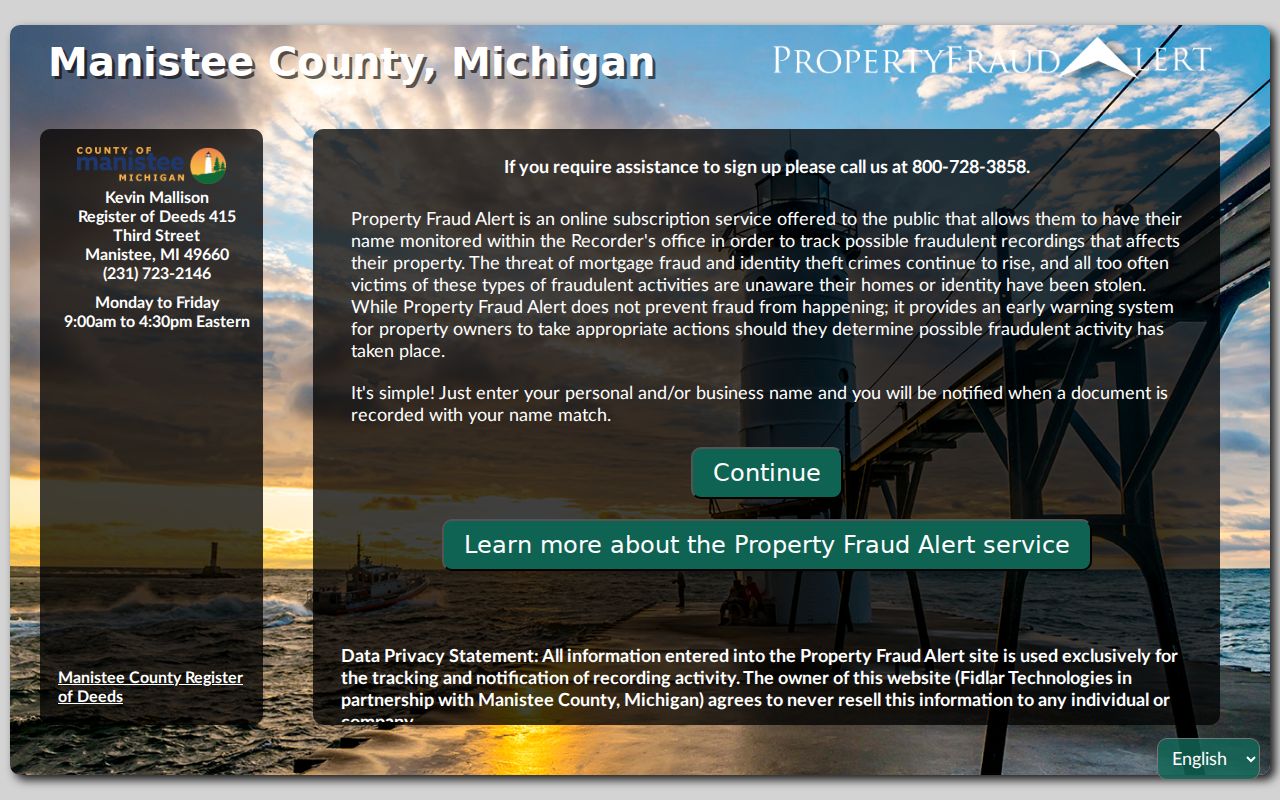
The alert extends deed monitoring beyond a single search while leaving document review with the record holder.
Verify a Manistee County Deed
Online access, the public vault, phone contact, and mailed copy requests form one complete chain. Start with the online index to find a reference. Then inspect the image where access allows. You can also ask the office for a plain or certified copy. Older entries may call for the Cott index and a vault pull. A general Manistee County property search can supply the parcel number. Do this before any deed work begins. Check the details against each other. Compare the grantee, grantor, recording date, instrument type, book/page or instrument number, and legal description. A tax certificate may figure into recording. But it never turns a deed into an assessment record. So the current tax roll and Treasurer files must be checked in their own systems.
Recorded, not guaranteed. Manistee County deed records show filed instruments. They do not resolve every unrecorded interest or replace a title opinion.